The Tax Code of Us
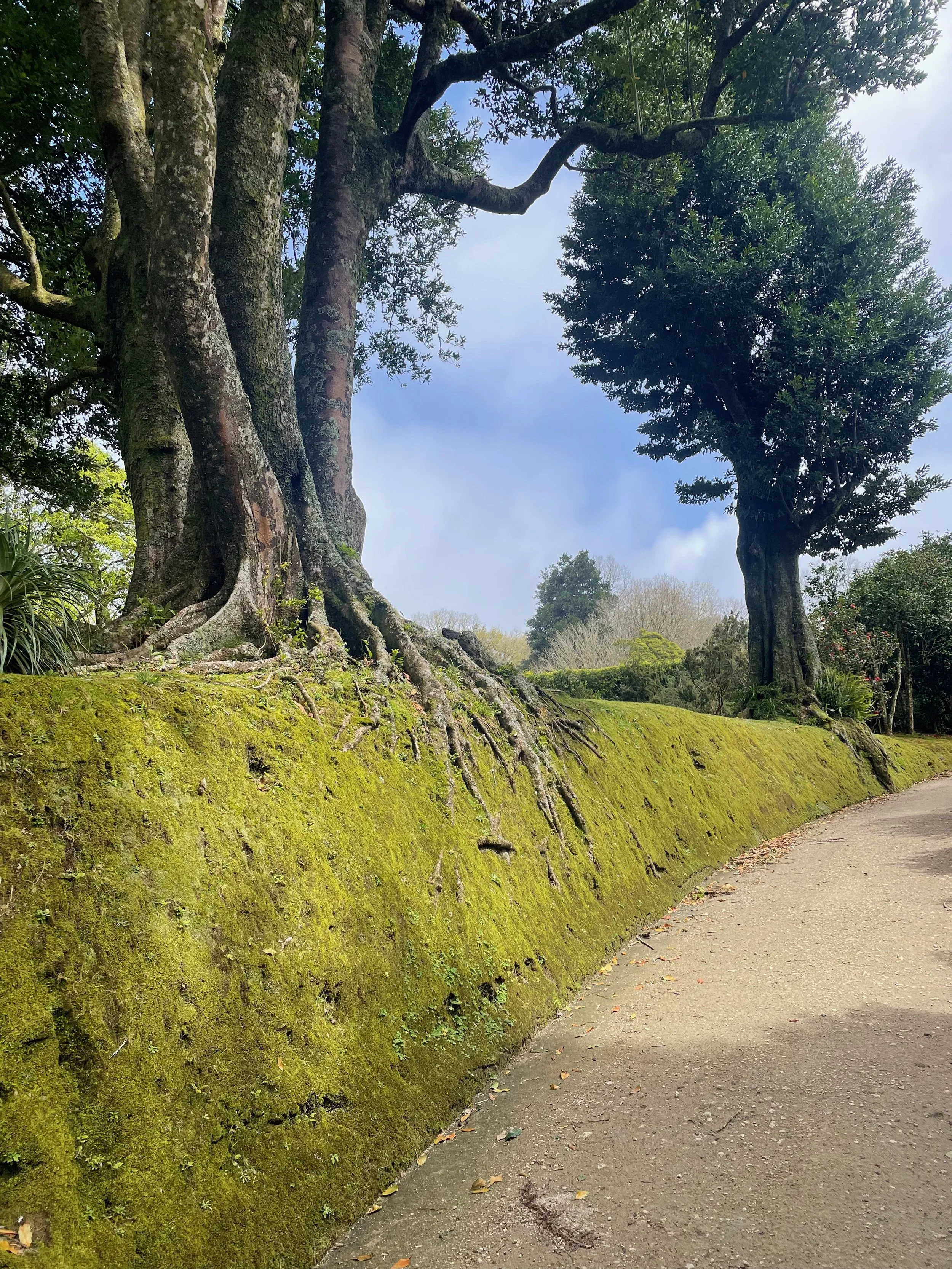
Last spring I walked along on the cliffs of São Miguel in the Azores at a residency with other futurists and watched the Atlantic throw its weight against the island. The former monastery I wrote from during our time together was made of volcanic stone.

We were prototyping a regenerative space where the line between art and living together was not an imagined future, but a present reality. In that place I began to dream of an endowment that could hold all of us. Not through transactions or private wealth. Through belonging. Through imagination. Through trust.
I see now that this was the beginning of a larger inquiry. A first stone of the house. An intuition before I had much language for it. I’ve been reaching toward a different kind of economy that does not fit the nonprofit frame and does not belong to the for-profit world either. It was a step into the not yet known.
So I have gone back. Into the pipes beneath the house. Into the history of the nonprofit tax code. Into what it built and what it broke. I’ve started to look beyond the usual reference points. Toward Majority World ideas that Western policy circles have ignored for too long. Toward cooperative models, Indigenous governance, feminist economics, degrowth theory, and the social solidarity movements that do not trace their lineage to Europe alone.
This is the next step in the work. I remain a creative, not an economist or an historian. But I believe artists see patterns where specialists see categories. We offer synthesis. We offer metaphor and systems thinking held in the same hand. That is its own expertise. A “currency”, as I’ve said before.
This essay gathers the threads again. It preserves the monastery insight, but builds the scaffolding that the last essay only danced around.
How Charity Became Policy
If we want an “endowment of us” as I’ve envisioned, we must first look at the endowment we already live inside. A system that has built a magnificent cultural infrastructure and at the same time granted a small slice of the population outsized control over what counts as the common good.
In the United States, where I currently live, this inheritance has a few names: The Tariff Act of 1894. The Revenue Act of 1913. The Revenue Act of 1917. The statutes that became Internal Revenue Code 501(c)(3). Laws made during war and boom times. Laws that decided which institutions would live “outside the tax stream,” and under what conditions. What is your awareness of these laws? My own was certainly nil.
Here’s a short primer: The notion that some institutions should sit outside the tax stream began with the Tariff Act of 1894, the first federal law to exempt charities from income tax. It didn’t last. In 1895, the Supreme Court swept much of the statute aside, striking down the tax itself. But the idea held. The moral impulse, that organizations serving the public good should be sheltered from the state’s reach, lingered in the air and waited for firmer legal ground.
Two decades later, after ratification of the 16th Amendment to the Constitution, the Revenue Act of 1913 established a modern federal income tax. Alongside it, lawmakers preserved a carve-out for civic leagues, associations and organizations “not organized for profit.” That formed a proto-nonprofit exemption.
In 1917 Congress introduced the first individual charitable deduction during wartime, explicitly to protect large-scale giving by wealthy donors facing steep tax increases. It was a fiscal maneuver designed less to encourage generosity than to safeguard the cultural influence of the elite. The deduction ensured that even as the country mobilized for war, the wealthy could continue underwriting universities, museums and private institutions… and be rewarded for doing so.
Over time, the law evolved further. In 1954, the Internal Revenue Code formally codified 501(c)(3), defining “charitable, educational, religious, scientific, or literary” purposes, forbidding private inurement and restricting political activity. For many of us this shift is not just legal history. The theaters we grew up attending, the museums that shaped our sense of place, the orchestras and opera houses that gave our cities cultural life often trace their founding to the decade that followed. The Guthrie Theater in Minneapolis. Arena Stage in Washington, D.C. Houston Grand Opera. Dozens of regional symphonies, museums and resident theaters across the country. This explosion of cultural institutions was no accident. It was the result of new legal architecture combined with unprecedented philanthropic capital. Between 1957-1976, the Ford Foundation alone invested over $400M in nonprofit arts organizations (equivalent to a staggering $3B today) . That money came with conditions. To qualify, groups had to adopt 501(c)(3) status, formalize their governance, and fit within the legal definition of public good. But, the law opened the door. Philanthropy filled the room. The result was a vast expansion of the nonprofit cultural infrastructure that still defines American arts today.
What Has Worked Since Then
The tax-exempt sector today is far from small or marginal. It contributes on the order of 5.3 percent of the US GDP, roughly $1.4 trillion in economic activity in 2024.
It is also a major employer. In 2022 over 300,000 nonprofit establishments accounted for 12.8 million jobs, equal to about 9.9% of private-sector employment. That makes nonprofits one of the largest employment categories in the country.
For arts and culture specifically this framework has enabled institutions ( theaters, orchestras, museums, arts centers, schools) to exist at a scale they likely never would under pure market pressure. The tax code’s subsidy of charitable capital made possible the very infrastructure that sustains creative communities across urban and rural America.
So… the nonprofit model has produced “real value.” It made possible a sector big enough to rival manufacturing. It made possible generosity beyond ticket sales. It made public purpose experiments possible experiments outside state or corporate domination.
Where the Catch Lies
But the system was never neutral. From its inception, it was wired toward consolidating control among existing power.
First, the charitable deduction. Because it only benefitted individuals who itemize taxes (typically higher-income taxpayers) it amplified the influence of the wealthy. The deduction was never about democratizing generosity; it was about preserving elite giving under higher tax burdens.
Second, “charity” became bound by legal definitions and restrictions. Under 501(c)(3), organizations must avoid private benefit, avoid partisan politics, and direct their revenues solely toward “charitable, educational, religious, scientific, literary” or related purposes. That legal container grants shelter from taxes — but it also disciplines what kinds of action, dissent, or redistribution are possible.
Third, the tax-exempt sector today has enormous economic weight. Some estimates place the broader “tax-exempt economy,” including health care systems, private foundations, higher education, and charitable organizations, at nearly 15 percent of U.S. GDP. It encompasses over 1.8 million entities managing trillions in assets. Yet scale is not synonymous with public benefit. Consider that Elon Musk’s personal foundation is now the most richly endowed in history, larger than Ford or Rockefeller at their peaks. And yet it remains largely opaque, with little evidence of sustained public good, minimal transparency, and few clear grantmaking priorities. The problem is not just regulatory laxity. It is the deeper structural flaw that allows vast private wealth to masquerade as civic virtue without delivering the goods.
This means that a large portion of what we call “public good” or “common culture” is actually shaped by private wealth and gate-kept by legal status. In practice, the nonprofit sector becomes a mechanism by which the wealthy configure public purpose. The tax code becomes not a refuge from the market, but another arm of it. For artists, this creates a paradox. Your work may be subsidized through nonprofit structures, but it is still filtered through the tastes, timelines and risk tolerances of those with capital. The result is a curated economy of permission, where creative freedom is shaped not by public need or cultural urgency, but by what survives the soft approval of philanthropic gatekeepers.
In effect the “nonprofit” is not the opposite of capitalism. It is one of its adaptive strategies.
Why the Binary Between Nonprofit and For-Profit No Longer Holds
Most critique treats “nonprofit” and “for-profit” as opposites. But the line is blurrier.
On the one hand: many legal and social enterprises operate at the edge. Generating revenue, paying salaries, pricing services, yet claiming tax-exempt status, or at least using nonprofit structures for legitimacy. The distinction between “mission-driven nonprofit” and “social enterprise” is often more semantic than structural.
On the other hand: for-profit models have begun to adopt cooperative, steward-ownership and community-centered approaches. Across the U.S. and globally there are cooperatives, community-owned enterprises, steward-owned companies and B-Corps that attempt to embed purpose alongside profit.
If we take this seriously, we can see that the binary never made sense. What matters is not legal status but the social contract: who owns, whose interests are prioritized, how decisions are made, and who benefits.
That is where a new economy might take shape.
What Could Be
(Post-Binary, Post-Charity, Post-Poverty-of-Imagining)
I do not ask for Utopia. I ask for plausibility. I ask for structures we can build now, using legal and financial tools already in existence.
Below are three overlapping models. Each borrows from known precedents. Each imagines a different way to anchor culture as a living, regenerative economy.
The Creative Trust
Imagine a pooled-capital entity, governed by artists, workers, communities, audiences.
It draws resources from municipal or regional funding, philanthropic contributions, revenue from services and ticket sales, and community-based membership dues.
It holds capital under a trust charter whose beneficiaries are not individual donors or shareholders, but a defined public: residents of a city or region, artists and cultural workers, communities historically excluded from cultural funding.
Governance is democratic or multi-stakeholder. Decision-making happens through participatory structures like councils, rotating boards, community groups.
It invests in cultural infrastructure: residencies, community arts centers, local festivals, shared rehearsal spaces, arts education… not just project-by-project but with long-term rootedness.
This is not charity. It is collective governance and shared ownership. A permanent home for cultural life that belongs to the people who live, make, and breathe it.
The Perpetual Commons Company
Borrowing from steward-ownership, worker-cooperatives and trust-based company models:
A corporation whose mission is locked in. The charter or trust prohibits sale to outsiders for profit.
Voting rights rest with “stewards” like artists, workers and community members rather than external shareholders. Stewards rotate periodically. Profits (if any) are reinvested in the company or distributed equitably to stakeholders, or used to subsidize free or low-cost programming.
The entity can engage in market activity (e.g. sales, services, ticketing) but those revenues serve the mission of sustaining cultural life, not extracting wealth.
I imagine theaters, galleries, collective studios, or residency platforms organized this way. The legal tools exist. The question is whether we claim them for culture rather than commerce.
The Cultural Dividend Fund
Inspired by models such as the resource-based dividend funds (e.g. in places where natural-resource revenues are pooled for citizens), a Cultural Dividend Fund would treat culture as a civic asset, not a charitable good:
The fund would be seeded by a mix of public investment (city, state, national), contributions from private philanthropy, and revenues generated by cultural institutions.
It would generate returns (financial, social, communal) and distribute a “cultural dividend”: support for artists, free access to cultural events, community-initiated projects, neighborhood-based arts infrastructure, arts education, and residencies.
Every resident (regardless of socioeconomic status) becomes a stakeholder, a recipient, a participant in cultural capital.
This is not charity. It is shared ownership. It is the idea that culture belongs to the collective, not to patrons.
What This Makes Possible for Culture
If we build along these lines, we begin to leave behind the limitations of both charity and market. We begin to construct institutions that are not beholden to the whims of individual donors or the changing priorities of foundations. These institutions do not treat artists as beneficiaries or applicants, but as co-owners, co-governors, and co-creators. They recognize culture as essential infrastructure, as fundamental to public life as housing, transit, or clean water. And they offer models of sustainability that do not require artists or organizations to compromise on mission, identity, or integrity in order to survive.
America is Not the Center of the Universe
To round out this inquiry, we need to look at what is already happening across the world. In communities. In collectives. In cooperatives. In Indigenous nations that have long-practiced models of governance and cultural stewardship outside both nonprofit and for-profit law. These are not speculative gestures. They are real structures that already work in different contexts. They offer lessons for what might be possible if we bring cultural life into alignment with systems that are communal, durable and accountable.
These examples are not exhaustive. They deserve closer attention, and I intend to return to them in future essays. I name these traditions not to summarize them, but to signal their centrality. Each offers frameworks far older, and often far wiser, than the systems that dominate our discourse in the US today.
First, we need a clearer understanding of the existing case studies. Cultural cooperatives in Latin America. Community-run art spaces in West Africa. Indigenous cultural trusts in Aotearoa, New Zealand and across First Nations territories. Solidarity-economy cultural hubs in the Philippines and South Asia. Each of these operates with governance and funding mechanisms that do not resemble the American nonprofit. Each distributes power differently. Each holds culture in ways that resist donor dependency or market extraction. Documenting how these entities govern themselves, how they sustain their work, and how they define value would help reveal what is transferable and what is place-bound.
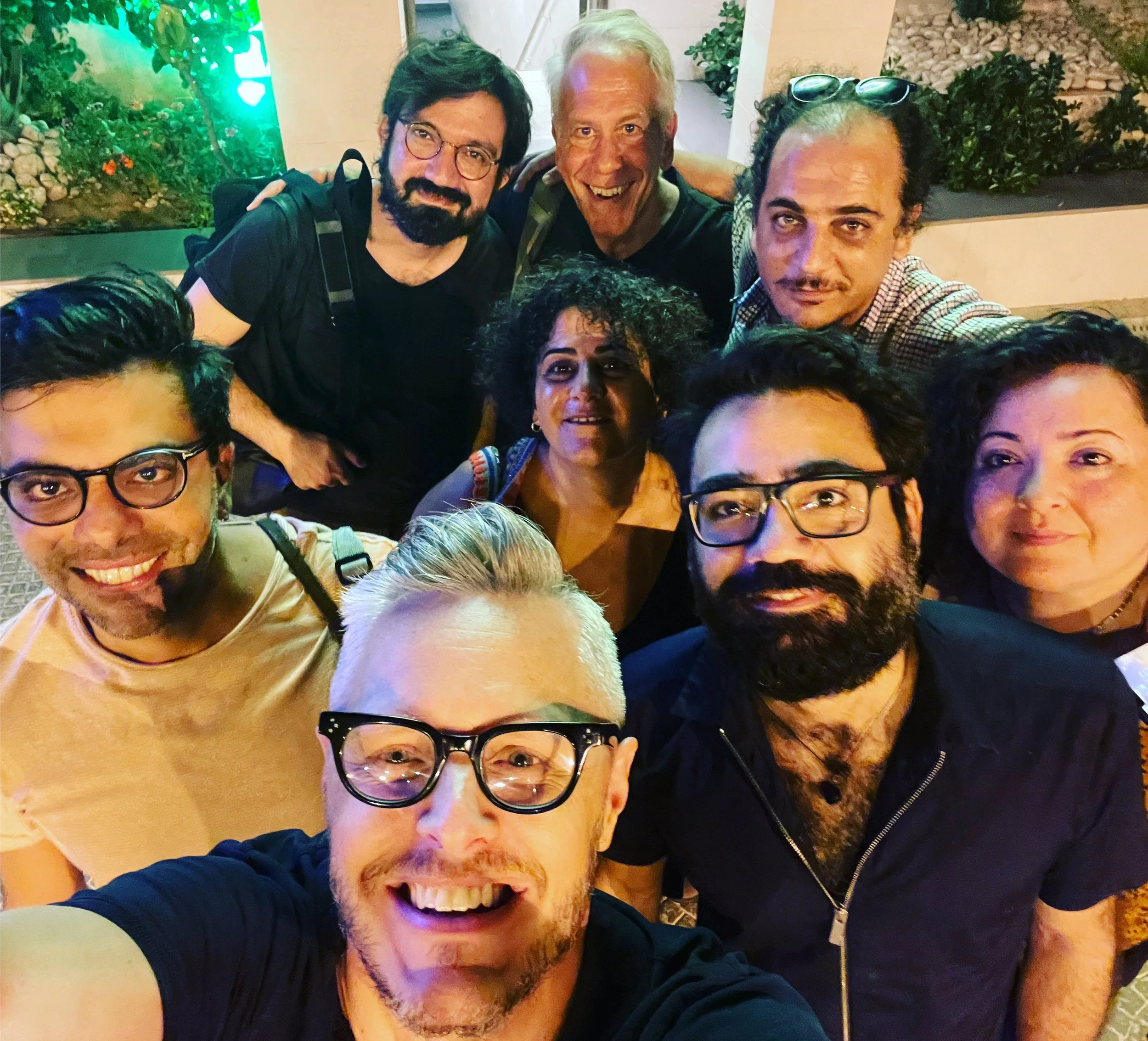
Zoukak Theatre with Board Members in Beirut
We also need to map their governance structures. Who decides. How decisions flow. How resources are shared. How responsibility is distributed. How communities become participants rather than clients. In many of these contexts, governance is not a board meeting. It is a circle, or a council, or a rotating stewardship. It is built on relationship, not hierarchy. Understanding these structures will help us imagine cultural organizations that do not default to private boards or donor oversight as their moral center.
From there, we need a new definition of cultural value. Markets recognize only what can be priced. Philanthropy recognizes what aligns with donor preference. But feminist economics and Indigenous epistemologies offer broader metrics. Care. Continuity. Communal well-being. Intergenerational responsibility. Cultural transmission. Belonging. Access. None of these show up on a balance sheet, yet they are the true indicators of a healthy cultural ecosystem. Bringing these value systems into cultural policy requires listening to wisdom that predates Western economics, and which has been marginalized by it.
We then need to work with legal scholars and cooperative lawyers to develop prototypes. How might a Creative Trust be formed under U.S. law? How could a Perpetual Commons Company lock mission into its charter? How can multi-stakeholder governance be codified so that artists, workers, and community members share authority. These prototypes need to exist not as lofty ideals, but as legal instruments that someone could file next week.
Finally, we need to test what we build. Not in theory. In real places. A neighborhood. A city. A residency. A collective. A community organization willing to prototype pooled capital, shared governance, cultural dividends and long-horizon stewardship. We need to track what sustains and what strains. What supports risk and what constrains it. What is culturally-specific and what is structurally-universal. These pilots would turn speculation into practice and practice into knowledge.
This is the work ahead. It honors systems that existed long before the American nonprofit code. It insists that culture can be held in ways that reflect community, not capital. And it begins to build the scaffolding for a cultural economy that is not just more functional, but more human.
Our Two Needs
I return to the monastery. I return to the Atlantic. I remember the stones and silence that helped me imagine an endowment of us.

But a romantic metaphor is not enough. The piece we build must name both. The poetry and the laws. The hymn and the ledger.
Because if we cannot speak to the pipes, the house will never stand. And if we cannot speak to the code, the endowment will remain a wish on paper.